



Exterior care, explained
Straight answers about exterior cleaning, drone deployment, what different surfaces need, and how we run a job.
How exterior cleaning actually works
They describe the same process with one difference: power washing uses heated water, pressure washing uses unheated. In everyday use the terms are interchangeable, and most companies advertising “power washing” are using cold water. Heat matters on grease, oil, and wax, where it lowers surface tension and dissolves residue that cold water only pushes around.
Pressure washing is water used as a tool. An engine-driven pump moves eight gallons a minute through a narrow nozzle, pushing pressure past 3,500 PSI, and that force alone lifts what’s built up on the surface. Which is why it’s the right call on concrete, brick, and stone, and the fastest way to ruin anything softer.
Soft washing trades force for chemistry. A dedicated rig applies cleaning solution at roughly 300 PSI, against the 3,500 a pressure washer puts out, lets it dwell for several minutes, then rinses clean, while algaecides, fungicides, and surfactants break organic growth down at the root. Low pressure application. Which is why it’s well suited to shingle roofs and certain facade materials, and why treating the organic growth can help results last longer than a pressure rinse alone.
Neither is better; they solve different problems. Pressure washing is correct for concrete, brick, natural stone, asphalt, and most metals. Soft washing is correct for roofs, certain sidings, stucco, wood trim, screens, and coated metal. Using pressure where soft washing belongs is the single most common way exterior cleaning damages a property.
As a working guide: concrete and masonry tolerate 2,500–3,500 PSI; wood decking 500–1,200 PSI; painted siding under 1,500 PSI and better served by soft washing; asphalt shingle roofs should never see pressure washing at all. The nozzle, distance, and dwell time change the effective force as much as the gauge reading does, which is why PSI alone is an incomplete spec.
It kills organic growth at the root instead of knocking it off the surface. Algae, mold, mildew, and bacteria are eliminated, along with their spores, so regrowth is measurably slower. A pressure rinse removes what is visible and leaves what will regrow.
Professional exterior cleaning uses several types of products, selected for the surface and buildup. A professional soft-wash mix typically combines four things: surfactants, wetting agents that spread the solution and reduce surface tension so it penetrates; detergents, which lift dirt and grime; biocides, most commonly sodium hypochlorite supplied at 12.5% concentration and diluted for the surface, which kill algae, moss, mildew, and lichen; and, selectively, acidic cleaners for hard-water marks and rust. Dilution is the variable that decides whether the mix is safe or damaging.
It is the active ingredient in household bleach, supplied to contractors at a much higher concentration, typically 12.5% versus roughly 3–6% in a retail jug, and then diluted on site for the surface being cleaned. It is the standard biocide in soft washing because it kills organic growth at the root rather than bleaching it out of sight.
Deionized water has been run through a resin-based filtration system that strips out virtually all dissolved minerals and ions, so it dries with nothing left behind to leave a residue: no spotting, no streaking, no squeegee, no detergent. It is the standard for window cleaning, glass curtain walls, high-rise facades, and solar panels, where any mineral film from ordinary tap water is immediately visible.
Tap water carries dissolved minerals, calcium and magnesium chiefly, picked up from the municipal supply. When it air-dries, the water leaves and the minerals stay, showing as spots, streaks, or a light film. It is a non-issue on concrete or siding and a real problem on glass, dark paint, and anything reflective.
Where grease, oil, or wax is the problem. Heat lowers surface tension and dissolves substances that cold water only displaces, kills bacteria and mold spores more effectively on contact, and lets cleaning solutions activate faster. That makes hot-water pressure washing the standard for fleet vehicles, loading docks, commercial kitchen exteriors, concrete plants, and manufacturing equipment.
Downstreaming injects cleaning solution into the water line after the pump, so the chemical is drawn in at low pressure and applied diluted. A dedicated soft-wash system uses a separate low-pressure pump and mixes to a controlled ratio before application. Downstreaming is faster to set up; a proper soft-wash rig gives more control over concentration, which matters on surfaces where getting the ratio wrong causes damage.
Yes, and it still has no substitute in certain places. Brushes, mops, squeegees, and detergent remain the right approach for tight corners, delicate trim, intricate signage, and spot touch-ups where a full pressure or soft wash would be overkill. It is slower and more labor-intensive, but it offers precision that water pressure cannot match.
That is Gloeocapsa magma, a hardy blue-green algae that feeds on the limestone filler in asphalt shingles. It is not dirt, and rain will not remove it. The real cost is not appearance: the growth holds moisture against the shingle, which is what shortens the roof’s life.
No, not an asphalt shingle roof, and you should be wary of anyone who offers to. The Asphalt Roofing Manufacturers Association is explicit that a pressure washer should never be used on asphalt shingles, because it causes granule loss and, in ARMA’s words, very likely premature failure of the roof system. Their published method is a cleaning solution applied by sprayer, allowed to dwell 15 to 20 minutes, then rinsed with low-pressure water. That is soft washing, and it is the only way SPRKL Co. cleans a roof, without exception.
Cleaning done to the manufacturer’s method does not; pressure washing frequently does, because granule loss is treated as damage rather than wear. Check the specific warranty, but the safe rule is simple: if a contractor proposes pressure washing a shingle roof, that is a reason to stop the conversation.
Most asphalt shingle roofs need attention every two to three years, sooner under heavy tree cover or on shaded, north-facing slopes where growth returns fastest. Roofs in full sun with good airflow can go considerably longer.
Algae is the blue-green or black growth that streaks roofs and shaded siding and feeds on surface minerals. Mildew is a surface fungus, usually powdery and grey or white. Mold is a fungus that can penetrate porous material and is typically darker and patchier. All three are moisture-driven, all three are chemical problems rather than pressure problems, and all three are treated by soft washing.
Efflorescence is the white, powdery mineral salt deposit that appears on brick, block, stucco, and concrete when moisture migrates through the material and evaporates at the surface. It can be removed, but it will return until the moisture source behind it is addressed, so recurring efflorescence is a water-intrusion problem being reported by the wall, not a cleaning failure.
Artillery fungus is a mold that grows in hardwood mulch and forcibly ejects tiny black spores that adhere to siding, cars, and windows, often several feet up. Once the spores cure they bond tenaciously and rarely come off completely without damaging the surface. Prevention, switching mulch types and keeping beds away from walls, works far better than any cleaning.
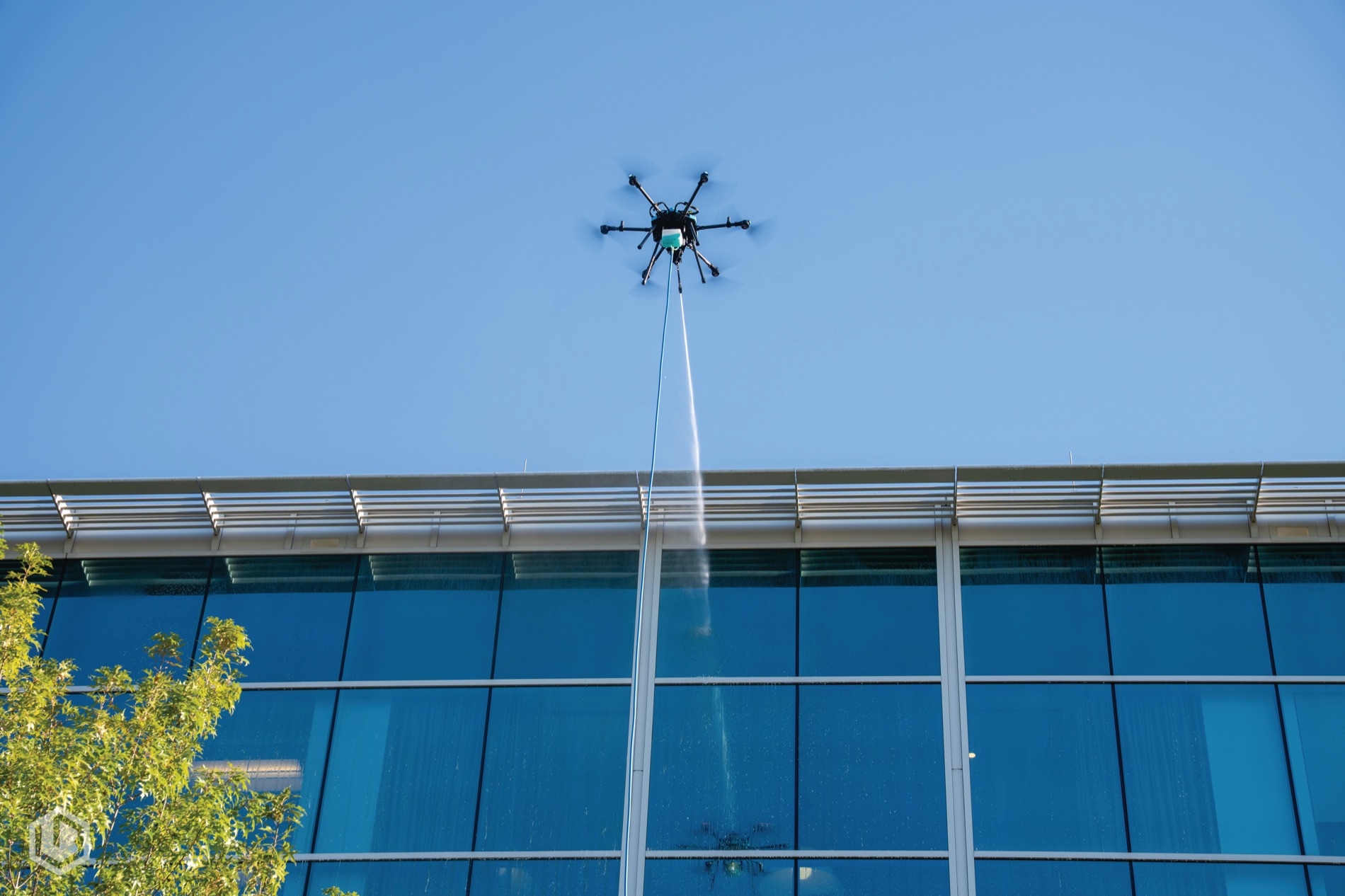
Simple answer is yes. Whether you should is a different question, and that comes down to two things: the age of the siding and how you’re going about it. Most of the damage people blame on pressure washing comes from spraying upward, which drives water behind the panels and into the wall. A ground crew has no real choice about that. A drone does: it rises to meet the wall head-on, pressure dialed back instead of opened up, with a little of our chemistry doing the rest. That’s where the sparkle comes from.
Brick and masonry generally tolerate direct pressure well. Stucco can crack under it, and painted or coated surfaces can strip or peel. Both are soft-wash candidates. The determining factor is always the condition of the material, not the material alone. Aged, chalked, or previously repaired surfaces behave differently from sound ones.
It can, easily. Wood and composite decking should be cleaned at reduced pressure or with a soft-wash approach depending on the material and its finish. If the plan is to re-stain afterward the prep is different than if the goal is a clean finished surface, so the intended outcome needs to be settled before the work starts.
It depends. Sand type, how long ago it was done, and the condition of the joints all factor in. We’ll flag it if we see it.
Usually to a substantial degree. Fresh oil lifts readily with hot water and a degreaser. Older stains that have penetrated deep into porous concrete typically lighten considerably rather than disappear entirely. Any contractor who guarantees complete removal of an old oil stain is overselling.
Deeply set rust, cured artillery fungus, recurring efflorescence, etched hard-water spotting on glass, oxidized or chalked siding, and failed paint or coatings. Some improve with specialized treatment; several are repairs rather than cleaning. A cleaning contractor’s most useful skill is telling you which is which before the job rather than after.
Not permanently. Nothing does, because the spores are airborne and the conditions that fed the growth remain. Soft washing eliminates the existing growth at the root, which delays regrowth substantially, compared with a pressure rinse. Reducing shade, improving drainage, and trimming vegetation back from walls extends the interval further.
Yes. Paint bonds to the substrate, not to the dirt, chalk, mildew, and pollen sitting on it, and coating over contamination is the most common cause of premature failure. Cleaning for a paint prep is a different specification from cleaning for appearance, so tell the contractor which one you need.
Once or twice a year in most environments, more often in dusty, agricultural, or high-pollen locations, and more often for low-tilt arrays that shed less on their own. Panels should be cleaned with products formulated for solar glass and framing, since harsh chemistry can degrade the panel or void a manufacturer’s warranty.
Yes, measurably. The National Renewable Energy Laboratory puts typical soiling losses at around 5% of output, with a documented range of roughly 3% to 25% depending on location and conditions. On a single home array that is a modest number; across a commercial array or a solar field it multiplies across hundreds or thousands of panels and becomes a real revenue line.
Twice a year is the general standard, after spring growth and after autumn leaf drop, with more frequent service under heavy tree cover. Clogged gutters overflow behind fascia, saturate soffits, and in cold climates contribute to ice damming, so the cost of neglect lands on the building rather than on the gutter.
Considerably. Airborne salt accelerates corrosion and buildup on nearly every exterior surface, siding, glass, railings, light fixtures, and hardware alike, so coastal properties generally need a shorter cleaning interval than inland ones. For a waterfront property the question is not whether exterior cleaning is necessary but how often it needs to happen to stay ahead of the damage.
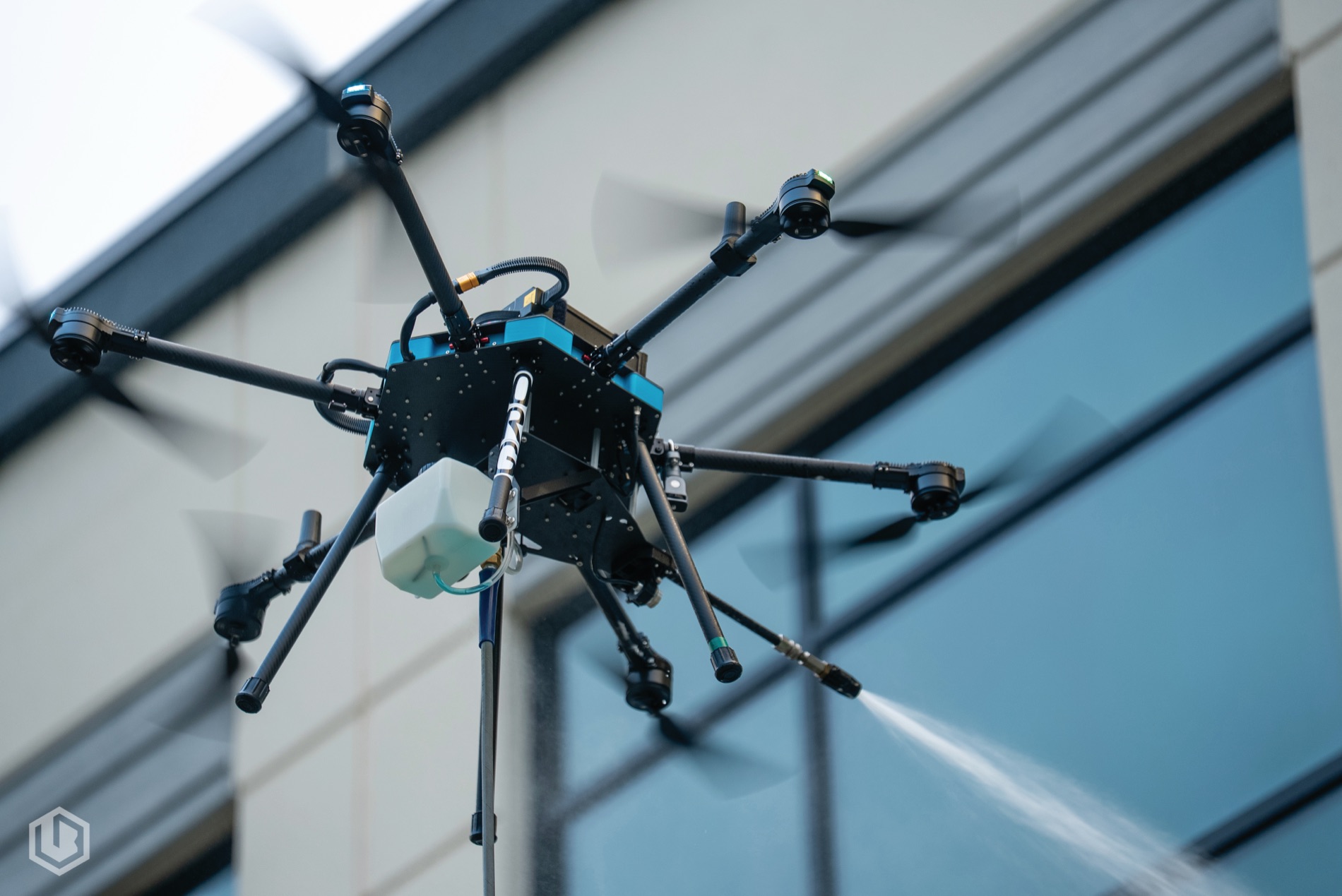
A cleaning drone is fed by a hose from a ground unit that supplies water and cleaning solution under pressure, and the pilot positions it to apply that solution to the surface. The methods are the same ones used from the ground for decades, the same chemistry, the same pressures, the same water standards. What changes is how the equipment reaches the surface, not what it does when it gets there.
Yes, when performed by a certified operator. Commercial drone operation in the United States is governed by FAA Part 107, which requires the pilot to hold a Remote Pilot Certificate, the aircraft to be registered, and the flight to comply with rules on weight, altitude, and airspace.
Part 107 is the federal rule governing commercial drone operation for aircraft under 55 pounds. Holding a Remote Pilot Certificate under it means passing an FAA knowledge exam, clearing a TSA background check, and completing recurrent training every 24 months. It is the legal minimum for anyone flying a cleaning drone commercially, and it is a minimum, not a standard.
Our current working ceiling is about 200 feet. Those limits are not fixed. They are a snapshot of where FAA regulation and drone technology currently stand, and both are moving quickly.
For the surfaces it suits, yes. The drone delivers the same pressurized water or soft-wash solution a ground crew would use; it simply delivers it from the air, reaching surfaces that would otherwise need scaffolding, lifts, or rope access. Effectiveness is determined by method and chemistry, and neither changes.
Tight corners, deeply recessed architectural detail, and anything that needs hand-scrubbing or physical agitation. Fully enclosed courtyards are the other one: surrounding walls block satellite line-of-sight and reflect the signal back as multipath interference, which degrades the GNSS lock the aircraft relies on to hold position. Drones excel at large, exposed, hard-to-reach surfaces. They’re one tool among several, not a replacement for every method.
It depends entirely on the job. For low, easily accessible surfaces, ground methods are more economical. For tall or scaffolding-dependent work, drone deployment frequently costs less overall once rigging, labor, permits, and days on site are counted, the savings come from eliminating access, not from the cleaning itself.
That is its clearest advantage. Nobody has to climb, tie off, rig, or work from a suspended platform, which removes the largest share of risk in exterior work at height. Falls are the dominant hazard in this trade, and drone deployment removes the person from the exposure entirely.
Considerably less than the alternatives. There is no scaffolding to erect over days, no lift trucks occupying entrances, and no rope crews working outside occupied windows. The work is completed and the site is clear far faster than any rigged approach allows.
Often, yes. Solution is applied directly where it is needed rather than relying on overspray and runoff from a ground-level lance, so less is wasted compared with some traditional high-reach methods.
Yes, and it is one of the strongest applications for the technology. Solar cleaning requires low pressure and, usually, pure water rather than aggressive chemistry, and a drone applies it precisely without anyone walking on the panels, which is itself a leading cause of micro-cracking.
Wind first, then precipitation, then temperature. Smooth conditions under 10 mph are ideal, with 15 mph sustained as a hard cutoff and 20 mph the ceiling for gusts. A light passing drizzle is workable; anything heavier means landing. Most operators also hold below roughly 40°F and above 100°F, where equipment performance and crew safety both degrade.
Only under the FAA’s specific "operations over people" rules, and only when the aircraft and the operation meet the applicable category requirements. Regardless of what the rule permits, competent ground planning restricts foot traffic under the flight path as a separate layer of protection.
Yes, when the site is in controlled airspace that requires authorization. We obtain approval through LAANC where available or through the FAA’s DroneZone process. Airspace is assessed during planning, and current restrictions and conditions are checked again before flight.
Short answer, yes. Part 107 allows it, and our aircraft carry the required anti-collision lighting. The better question is whether we should, and that comes down to visibility. If a property genuinely needs night work and the lighting supports it, we’ll quote it; night operations carry their own planning and their own cost. If the light is low and we don’t have full visibility of both the aircraft and the surface, we don’t fly. That’s not a regulation. That’s our rule.
Ask for the pilot’s Part 107 certificate. Ask specifically whether their insurance covers aerial operations in flight, not only ground work. General liability policies frequently exclude it. Ask how they handle airspace authorization. Ask what happens to any footage their drone captures, ours doesn’t record. And ask what they would do if your site turned out not to suit drone deployment: a contractor who says every property qualifies has not looked closely at yours.
Most professional pricing is built from surface area, the method the surface requires, access difficulty, and the condition of the material, not from a flat hourly rate. Height and access are usually the largest single variable, which is why two buildings of the same square footage can price very differently.
A number given without eyes on the property is a guess, and guesses turn into change orders. A physical inspection is where access, material condition, water supply, obstacles, and safety planning get established.
Spring and autumn are generally ideal in temperate climates: spring clears winter salt, sand, and pollen; autumn clears a season of organic growth before it sits over winter. Summer is entirely workable. The practical floor is temperature: most cleaning chemistry and most drone operations have a lower limit around 40°F.
Above roughly 40°F, generally yes. Below that, cleaning solutions lose effectiveness, rinse water can freeze on the surface and create a hazard, and drone equipment performance degrades. Flat work and hardscape are more forgiving than roof and facade work.
The real answer is it depends. A traditional home can take up to half a day, and so can an office building; scope and condition drive it more than size does. There are too many variables to put a number on it without seeing the site first. What we can tell you is that on any building that would traditionally need scaffolding, drone deployment cuts that timeline dramatically.
It depends on method and exposure. Soft-washed surfaces hold up considerably longer than pressure-rinsed ones because the growth is killed at the root. Shaded, north-facing, and coastal surfaces regrow fastest. Most homes settle into an annual cycle; most commercial properties into a quarterly or semi-annual one.
It protects value more reliably than it adds it. Curb appeal affects appraisal and sale outcomes, but the durable financial argument is preventative: algae, grime, oxidation, and salt degrade facade materials, roofing, and glass, and routine cleaning costs a fraction of the repair or replacement that deferred maintenance eventually forces.
Most commercial properties land on a quarterly or semi-annual rotation, driven by exposure rather than by the calendar. Traffic corridors accumulate exhaust residue, coastal properties pick up salt film, and shaded elevations grow algae. Buildings whose exterior does customer-facing work, such as hospitals, hotels, and retail, generally justify the shorter interval.
This depends on the size and scope of the project, the property’s condition, and how long it has been since it was last cleaned.
Under the Clean Water Act, wash water from exterior cleaning may not flow untreated into storm drains, which discharge directly to natural waterways. Responsible contractors contain and direct runoff, and use containment or filtration on jobs where the contaminants require it. Discharge practice is a legitimate question to ask any contractor before work begins.
Professional solutions applied at correct dilution are safe for the surrounding property; the same solutions applied carelessly are not. Correct practice means pre-wetting and covering landscaping, cordoning the work zone, keeping pets and people clear during application, and rinsing thoroughly afterward. Dilution and rinse technique matter more than which product is on the truck.
It does not have to be, and done properly it is a net positive, maintained materials last longer and get replaced less often. The environmental risk in this trade comes from two specific failures: uncontained runoff reaching storm drains, and improperly diluted chemistry reaching soil and planting beds. Both are avoidable through technique rather than through avoiding the work.
On applicable jobs, yes. Reclamation systems capture runoff, filter it, and reuse or dispose of it appropriately rather than releasing it. It is standard on surfaces where the runoff carries oil, grease, or heavy metals, fleet washing, loading docks, and industrial hardstanding especially.
It varies by jurisdiction, and more often than contractors assume. Many counties license home improvement contractors for residential work, and some name pressure washing as a licensed trade in its own right. Ask any contractor for their license number and verify it in the issuing authority’s database before hiring: the check takes a minute.
Without it, an injury on your property can become your liability. Exterior work involves pressure and chemicals, and a contractor who cannot produce a workers' compensation certificate is transferring that exposure to the property owner. Ask for the certificate, not the assurance.
A COI is the one-page summary of a contractor’s active coverage. For exterior work it should show commercial general liability, commercial auto, workers' compensation, and, if drones are involved, aerial liability covering operations in flight. Commercial clients typically also require being named as an additional insured, with waiver of subrogation and primary and non-contributory wording.
Proof of insurance including workers' compensation and, if drones are involved, in-flight aerial coverage. Licensing for the jurisdiction. References from comparable properties. And a clear explanation of which method they will use on which surface and why. A contractor who cannot answer that last one clearly is guessing at your property’s expense.
How we work, and what to expect
SPRKL Co. provides professional exterior cleaning for residential, commercial, industrial, and municipal properties, using both traditional methods, pressure washing, soft washing, hand cleaning, and drone deployment for surfaces that are difficult, unsafe, or expensive to reach any other way.
Yes. Drone deployment uses the same proven methods that have been used for decades, the same chemistry, the same pressures, the same water standards. What changes is how the equipment reaches the surface, not what it does when it gets there. Delicate materials still get soft washing at low pressure, glass still gets deionized water, durable surfaces still get pressure. Every pilot is FAA Part 107 certified and additionally trained in-house, and we are fully insured on land and in air.
Yes, fully insured for ground and aerial operations. SPRKL Co. maintains commercial general liability insurance, commercial vehicle insurance, workers' compensation insurance, and aerial (drone) general liability insurance, plus any other coverage required to stay compliant with applicable local, state, and federal law. A certificate of insurance is available on request.
Every SPRKL Co. pilot holds an FAA Part 107 Remote Pilot Certificate and then completes additional in-house training on the specific commercial cleaning drones we operate, which differ substantially from the consumer aircraft most people picture. Every pilot also comes from a hands-on exterior cleaning background, not only a flying one.
No. The drone carries a camera so the pilot has direct visual of where the spray is going, but it is not set up to record video or capture still images. When a project calls for photography, such as before-and-after documentation for your file, we deploy a separate traditional camera drone for that specific task.
No. Scaffolding, rigging, and manual facade cleaning will be around for a long time, but we leave that to the experts and work directly with the best ones, who help us out when needed. Drone deployment removes the climb from the jobs where it qualifies, which is a growing share of them.
Site conditions, height and obstacles, above all, are the main determining factors. There are a lot of other variables we assess during the physical inspection, which is one of the main reasons why we always come out and look before the actual service day.
Carefully, and as a formal step rather than an afterthought. Assessing airspace is part of our plan-of-attack stage: every flight plan is cross-referenced against current FAA airspace requirements, NOTAMs, weather, and site-specific restrictions. Where authorization is required, we obtain it before flight through LAANC or the applicable FAA authorization process.
SPRKL Co. is a new company, and we would rather say that plainly than dress it up. What is not new is the team: every person here has run their own business, with hands-on backgrounds spanning contracting, exterior care, and vehicle and fleet detailing, and the company was built on twenty-five years of experience developing and running franchise systems. The processes, training, and safety protocols we operate under were worked out over a year and a half before we took our first job.
Our crews are our own, trained on our processes and held to our standards. Where a project calls for specialist access work such as scaffolding or rigging, we bring in established specialists we work with directly rather than pretending it is in-house, and it stays under our supervision and our safety plan.
Building exteriors, facades, curtain walls, windows, and roofs. Ground surfaces, driveways, sidewalks, walkways, patios, decks, and parking areas. And specialties, including gutters, solar, and shrink wrapping.
Commercial, industrial and municipal, and residential. Commercial covers office buildings and parks, hospitals, hotels, retail, and healthcare. Industrial and municipal covers water towers, storage tanks and silos, bridges and overpasses, arenas and stadiums, manufacturing and concrete plants, solar fields, schools, and public facilities. Residential covers single-family homes, gated communities, and apartment buildings and complexes.
No. Window cleaning at SPRKL Co. is exterior only, for both residential and commercial properties. That focus is deliberate. It is what lets us specialize in the hard-to-reach exterior glass that most companies either skip or price prohibitively.
Yes, rooftop arrays on homes and businesses, and full ground-mounted solar fields, using products formulated specifically for solar glass and framing.
Yes. We offer simple gutter flushing, often alongside roof cleaning. We work from the ground and do not clear clogs or service gutters fitted with gutter guards. We will explain the scope before work begins.
Shrink wrapping seals a structure or piece of equipment in industrial film, used for protection during storage, transport, construction, or seasonal weatherproofing. It is a protective service rather than a cleaning one, and we offer it alongside the rest of our work.
Yes, final clean on new construction, post-glazing window and curtain wall cleaning, concrete and hardscape cleanup, and mortar, stucco, or overspray removal, timed to your certificate of occupancy or turnover date.
SPRKL Fleet is our dedicated division for fleet and vehicle care, covering everything on wheels, on water, and in the air. It splits into residential, where care covers both the exterior and the interior, and commercial, industrial, and municipal fleet work, which is strictly exterior.
A wash is maintenance: removing dirt, pollen, road film, and salt before they have time to do damage. A detail goes deeper, decontamination, correction where appropriate, interior work on residential vehicles, and protective products measured in months rather than days.
A weekly wash, a monthly detail, and once a year a full detail with wax and protective coating. The weekly wash keeps salt and road film from sitting long enough to etch the finish; the annual coating is what carries the paint through a winter. That schedule holds whether it is a daily driver, a specialty car, an RV, a boat, or a private aircraft, the vehicle changes, the logic does not.
It depends on exposure, but most fleets running daily do best on a biweekly or monthly exterior schedule, tightening through winter when road salt and brine are heaviest. The vehicle type matters far less than the exposure.
Road salt and brine attack a vehicle from underneath, where nobody looks until something fails. Undercoating treatment and regular underbody washing are the difference between a truck that finishes its service life and one that rusts out years early. For municipal fleets running plows and sanders, it is the highest-return item in vehicle care.
Yes, both. Salt exposure makes marine finishes among the fastest-degrading surfaces we work on. Aircraft exteriors require products approved for aviation finishes and careful handling around control surfaces, antennas, static wicks, and pitot-static ports. It is not a car wash with a bigger bucket.
Yes. Fleet work happens at your yard or lot on a schedule you set, and residential vehicle care happens in your driveway.
Yes. It is what the company is built around: scheduled rotations, a single point of contact, documented visits with photography and field notes, and certificates of insurance available for your files.
Same day in most cases. We keep a current COI, W-9, workers' compensation and disability certificates, and Part 107 pilot credentials packaged and ready, and we can add named additional insureds and the endorsement language your agreement requires.
Yes. We work regularly with property management companies, association boards, and facility managers who have their own paper, and we are comfortable reviewing and executing standard vendor agreements.
Both, though portfolios are where we do our best work. One schedule and one agreement across a portfolio is more efficient than pricing each property separately every year, and it produces a consistent standard rather than a different result at each address.
We aim to complete all projects during regular business hours, and we’ve found that most work can be handled successfully around normal building activity. If special scheduling is needed, let us know and we'll do our best to accommodate your needs.
We provide advance notice materials for you to distribute, post signage at affected entrances, and coordinate closures and reroutes with your team before the work date. In an occupied building, the communication plan is part of the job.
Yes. We are familiar with municipal procurement, including the documentation and prevailing wage requirements that apply to public agency work, and we can provide the full compliance package a purchasing department requires.
SPRKL Co. is a new company, so rather than hand you a list we would tell you plainly where we stand. Every person on our team has run their own business, with years of hands-on background in contracting, exterior care and fleet detailing, and we are happy to walk you through comparable work in detail. As we complete jobs we will connect you with clients running the same kind of building, and until we can, we will say so.
No. The on-site assessment is free, and it is not a sales visit. You get an honest recommendation about what needs doing, what can wait, and how often your particular property calls for it.
A lot can be accomplished before we arrive; photos, videos, emails, conversations, but you need eyes on a project to truly understand it. Our crew needs to be prepared. The physical inspection is where we identify challenges, build the safety plan in advance, determine the right tools, and decide whether the site qualifies for drone deployment.
Submit a request through our Contact page or quote form and we will follow up to schedule the site assessment. From there you get a firm price based on what we actually saw.
It varies by season and job size, but a few weeks ahead is a safe guideline, and longer for large commercial or scheduled maintenance work.
We run scheduling, quotes, and invoicing through Jobber, so you receive digital estimates, appointment confirmations, and invoices you can pay online rather than dealing with paper or phone tag.
Not necessarily for residential work, provided we have access to the water hookups identified during the assessment and to the areas we need to reach. For commercial and municipal work we usually want a site contact available at the start and for the final walkthrough.
Close all windows and doors including storm windows, move vehicles clear of the work area, bring in patio furniture and cushions, and keep pets indoors for the duration. Tell us in advance about known leaks, damaged siding, loose trim, or open crawl space vents. We handle everything else.
Yes, we typically connect to an exterior spigot. The water used will appear on your bill, though the added cost is generally minimal. If a suitable water source is unavailable, we can arrange for water to be delivered. Any delivery charges will be included in your quote and agreed upon before work begins.
We secure the work zone first, cones and tape, and every access point identified during the assessment blocked, monitored, or actively staffed. The crew gears up in full protective equipment before a single tool is switched on. At times that means a temporary inconvenience: a blocked entrance, a rerouted walkway, a short delay. We treat that trade-off as non-negotiable.
A little rain never stopped anybody, including us, but we do have our limits. Our drone can handle a light drizzle passing through; if it gets heavier, it is time to land. Traditional cleaning on patios and flat work carries on unless it is an actual storm. Roof and facade work is more weather-dependent by nature, and we will reschedule rather than compromise a result or a safety plan. If we move a date, you hear it from us as early as we know.
A final walkthrough with your site contact, where we review everything completed, go over anything we encountered, and make recommendations for future visits. Everything is documented: field notes, before-and-after photography, equipment and tool settings. All of this is added to your project file, so the next visit builds on what we learned already, rather than starting from scratch.
Yes, and most commercial and municipal clients work with us that way. A recurring rotation costs less per visit than one-off service, keeps a property consistently maintained rather than swinging between clean and neglected, and turns a variable expense into a predictable line item.
During the initial walkthrough, we assess the surfaces and their condition, explain what the service can reasonably achieve, and set clear expectations before work begins. Some staining, wear, and deterioration may remain after cleaning, so we do not promise a like-new finish or complete removal of every mark. Our goal is to achieve the best possible result while protecting the materials we’re caring for.
It will look dramatically better, and on most surfaces, close to new. What cleaning cannot fix is damage, oxidized siding, permanently stained concrete, failed sealant, spalling masonry, and rust bleeding from embedded metal. We tell you which is which during the assessment, so nothing is a surprise on service day.
See our Where We Service page for current coverage. We add territory as we grow.
Still have a question?
Ask us directly. If it is a good question, it ends up on this page for the next person.