



How we prepare
Not all structures are created equal. Every project runs through the same five stages, built around one principle: safety first and quality always.
Our 5 Step Process
Every project runs through the same five steps, in the same order. Scroll through them one at a time.
Project assessment
We always walk the property before service day. You need eyes on a project to truly understand it.
A lot can be accomplished before we ever arrive on site. Photos, videos, emails and conversations help us begin understanding the project, but we will always conduct a physical inspection before service day. We believe you need to have your eyes on the project before you can truly understand it. This inspection allows us to identify potential challenges, develop our safety plan in advance, and begin determining the right tools and approach for the job. During our walkthrough we assess and document the type of structure, its material and condition; pedestrian and vehicle traffic and access points; water hookups and water pressure at each point; obstacles and surrounding conditions such as trees, bushes and power lines; van and equipment placement; and photo documentation of the entire project area with field notes.
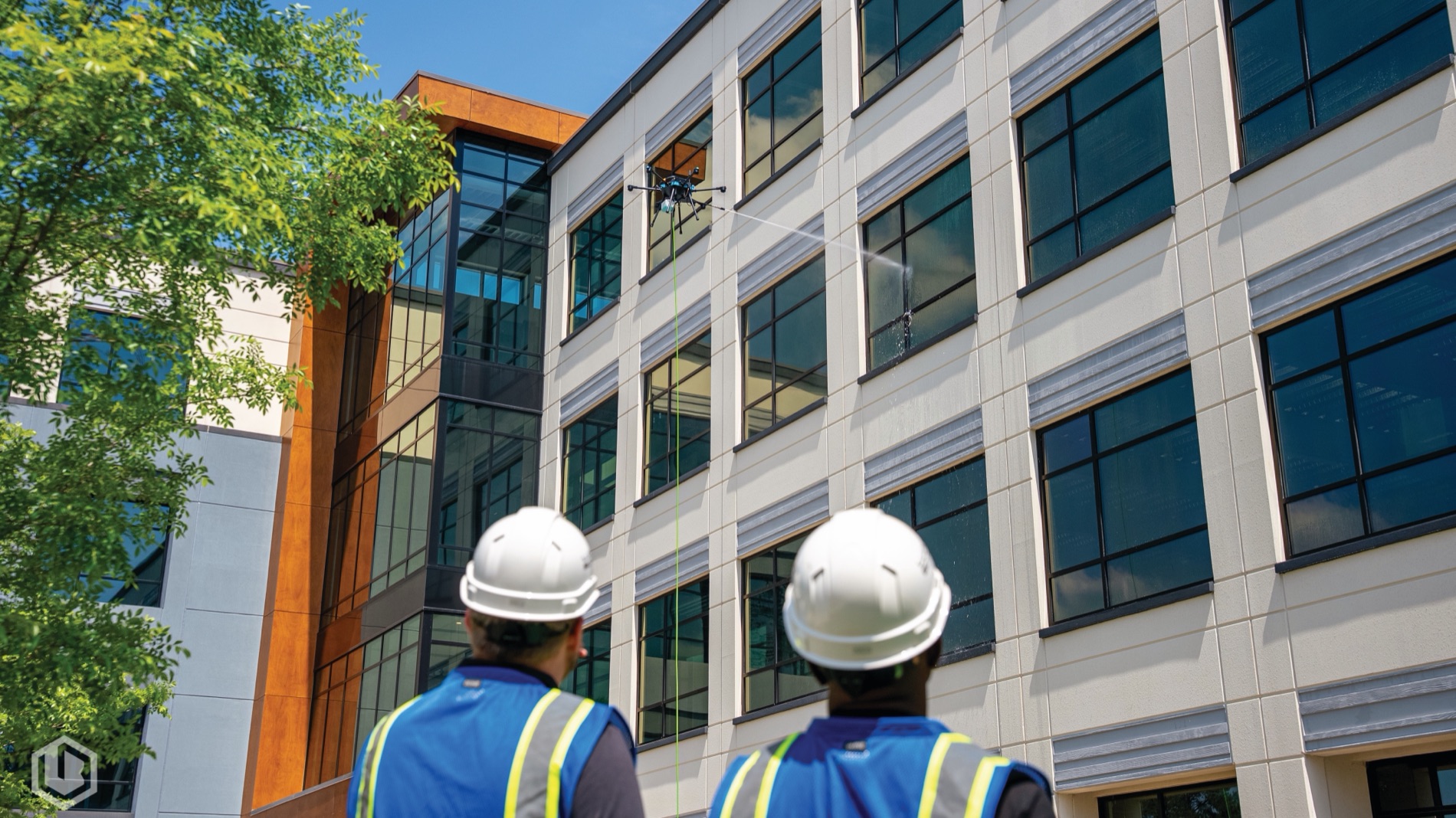
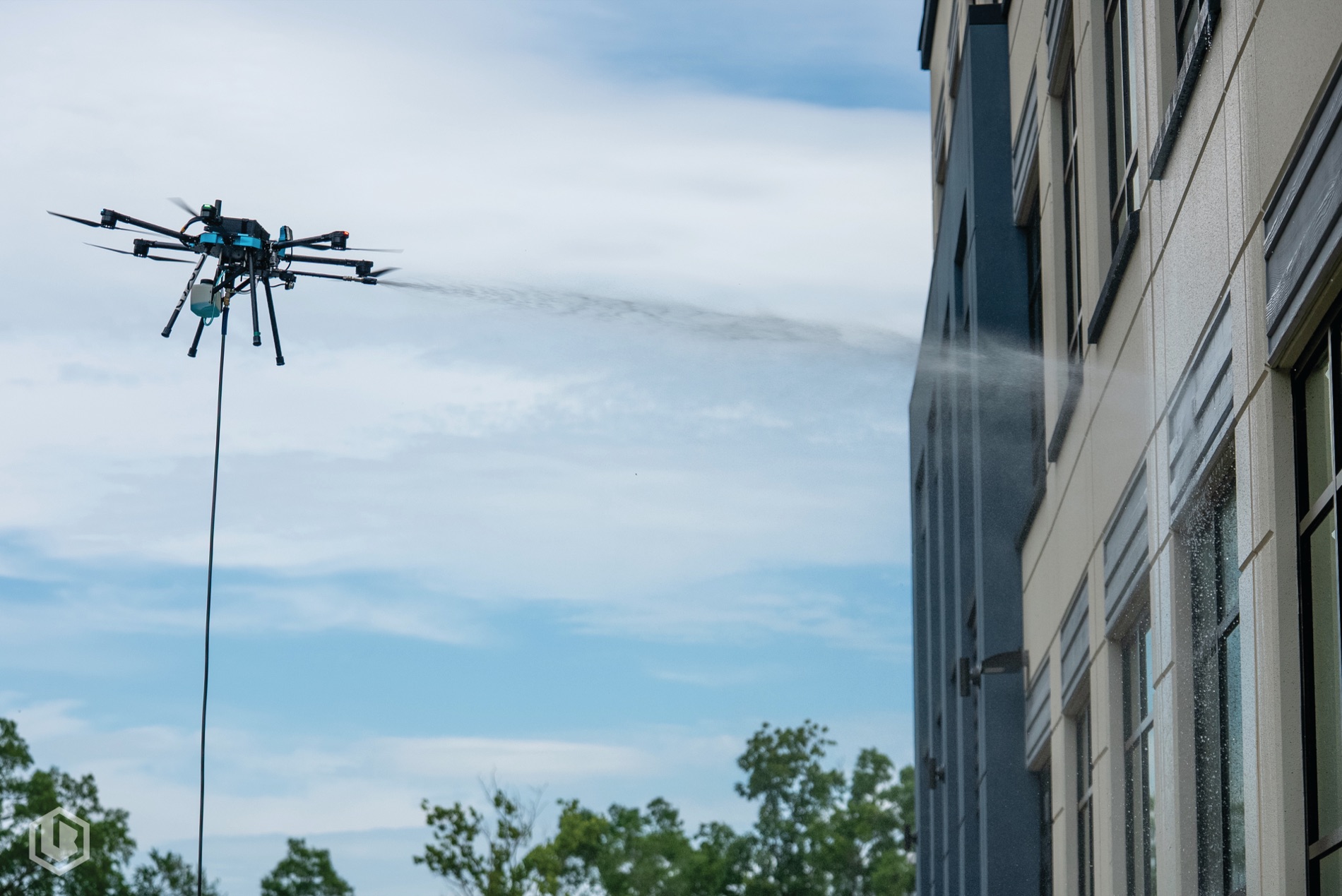
This is also where we determine whether the site qualifies for drone deployment. It would be easy to assume every project is a fit, but even drones have limits. The most common deal breakers are physical obstacles, power lines above all, and pedestrian activity that cannot be easily redirected.

Plan of attack
Every tool, parking spot, launch zone and closure is decided before we arrive.
Once all of the site data has been collected, we begin developing our plan of attack. This consists of everything from what tools will be used and where, where we will be parking, how and where we will start the cleaning process, what areas will need to be closed off, what protective measures will be implemented, launch zones, and more. Assessing the airspace is also a necessary step that we take very seriously, especially in an area with four airports just miles away. All plans are cross-referenced against current FAA airspace requirements, NOTAMs, weather and site-specific restrictions. When required, the appropriate FAA airspace authorization is obtained before flight through LAANC or the applicable FAA authorization process.
Safety first
Nothing is switched on until the site is secured.
This is the most involved step in the entire process, and the one we take most seriously. Being prepared in advance only gets us halfway there. Our teams are also trained to adapt to anything unexpected once we are on site. We start by securing the work zone itself, cordoning off the area with cones and tape, and confirming that every access point identified during our assessment is blocked, monitored or actively staffed. From there, the crew gears up in full protective equipment before a single tool is switched on. From this point forward, every measure and decision is focused on protecting three things all at once: the people around us, the property we are working on, and our own crew. At times this may mean a temporary inconvenience, a blocked entrance, a rerouted walkway, a short delay, but it is a trade-off that we treat as non-negotiable.

Go time
Whether we’re deploying a drone or working from the ground, the same preparation, safety measures, and standards guide the work.
Our crews use the methods selected during the assessment, matching the approach to each surface. For drone work, every pilot holds an FAA Part 107 Remote Pilot Certificate and completes intensive additional training through SPRKL Co. on our equipment, procedures, and standards.
Debrief
A final walkthrough with your site contact, then everything goes into the project file.
The last step of every project is the same, regardless of the tools used: the final walkthrough. We will walk the property thoroughly one last time before having our site contact join us to review everything we have completed. At this time we will also go over everything we have encountered and make recommendations for future visits. Everything is documented. Our detailed field notes, before-and-after photography, equipment and tool settings, and any other pertinent information are added to the project file. This creates a complete record that can be referenced on future visits, allowing our team to build on what we learned rather than starting from scratch.
Everything ends up in the project file
The debrief is not a formality. It is what makes the second visit better than the first.
- Field notes
- Before & after photography
- Pressures & dilutions used
- Conditions encountered
- Next-visit recommendations
Start with the walkthrough
Free, and takes about an hour for most properties.